



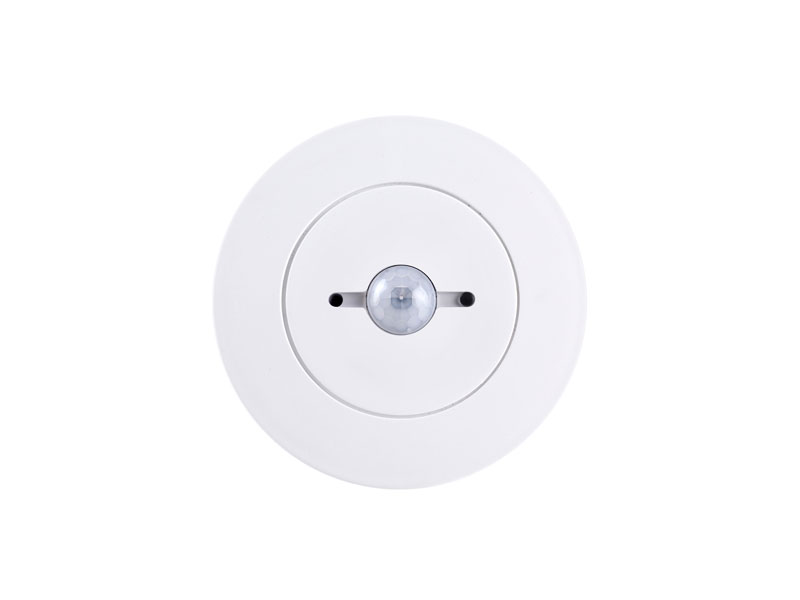
Sensore di presenza KNX con controllo luminosità
Code:PD00E3xKNX
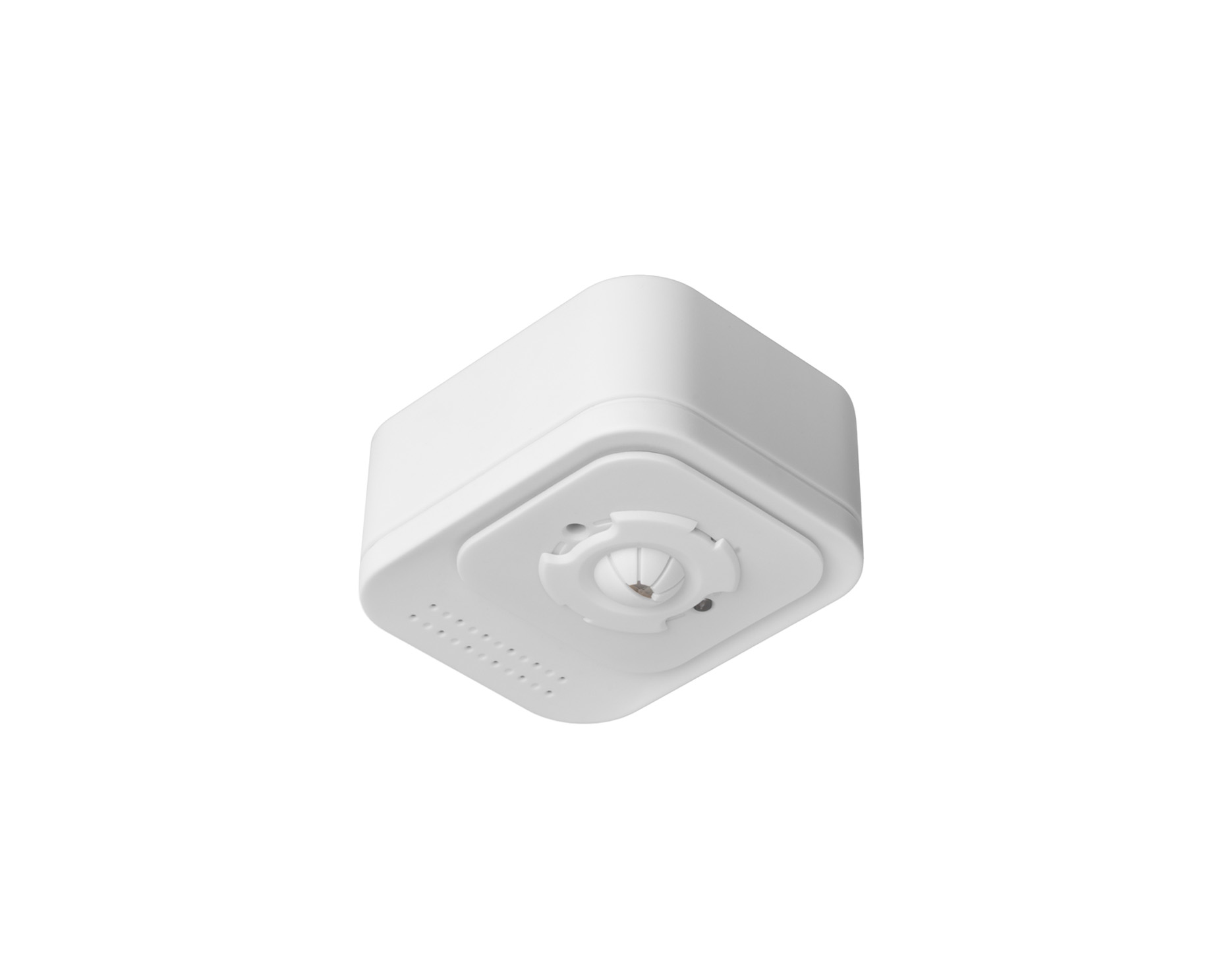
Code:PD00E3xKNX
The range of Eelectron presence sensors suitable for wall mounting consists of 2 versions: 1 suitable for mounting up to 4 m height and 1 HI-BAY up to 16 m height.
Both STANDARD and HI-BAY versions include a brightness sensor for environmental lighting control.
All versions have a rear connector with 3 digital inputs that can be connected to buttons or switches free of potential and used for on / off commands, dimming, shutters or blinds / scenarios, sequences, step commands, etc.
In both versions one of the 3 inputs can be configured as analogue for the connection of NTC temperature probes (see eelectron probes code TS01AxxACC/TS01BxxACC/TS01CxxACC/TS01DxxACC) with which to send the temperature measurement on the bus or manage a complete thermostat module. The thermostat manages 2 stages with an integrated PI controller for controlling heating and cooling equipment, valves, 2 and 4-pipe fan coils, etc.
Presence detection, based on a passive infrared sensor, has 5 independently configurable channels with different functions that can be activated: presence with or without brightness control and with automatic or semi-automatic detection; constant brightness independent or presence dependent with automatic or semi-automatic activation.
Moreover, 12 logic blocks are available to implement simple expressions with logical or threshold operator or complex expressions with algebraic and conditional operators; It’s possible to use predefined algorithms as proportional controls of temperature and humidity or dew point calculation.
The device also integrates the “Virtual Holder Logic”; the field of application is the hotel room: through a magnetic sensor installed on the door and connected to a digital input (also to the sensor itself), accurate presence information is managed. The presence detection solution can deduce the presence of people in the room using one or more dedicated sensors. It also detects an unexpected presence and is able to differentiate more behaviors.
The device manages the ambient lighting based on the measured illuminance; it is also possible to enable the logic called “Circadian Rhythm” with which brightness and color temperature are imposed on the basis of predefined curves or on the basis of the real position of the sun during the day with respect to a terrestrial coordinate. This function allows you to recreate lighting comfort in an environment as close as possible to reality.
The measurement of lighting in the environment is carried out indirectly and it is therefore necessary to carry out a calibration. The sensor is installed on the wall and the detected brightness may differ significantly from that of the work surface; using the ETS software it is possible to set correction parameters for the device basing on a local measurement using the lux meter.
Avoid direct sunlight or artificial light radiating the sensor directly.
The sensor detects the difference between ambient temperature and temperature of moving objects and people; the lower this temperature difference will be, the less sensitive the sensor will be.
To ensure correct coverage of the sensor surveillance area, prevent walls (even glass) or furniture from being an obstacle; if this is not possible increase the number of sensors in the area in order to have a complete coverage.
Always mount the sensor on a stable surface, not subject to vibrations or oscillations that can simulate movement.
Lighting devices placed near the sensor or in the monitored area can cause false readings, avoid this interference as much as possible.
In the coverage area avoid appliances that produce heat such as fan coils, printers, lamps, etc. . or objects that can move due to wind or air currents.
COLORS, CODES AND MODELS
PD00E31KNX
WHITE
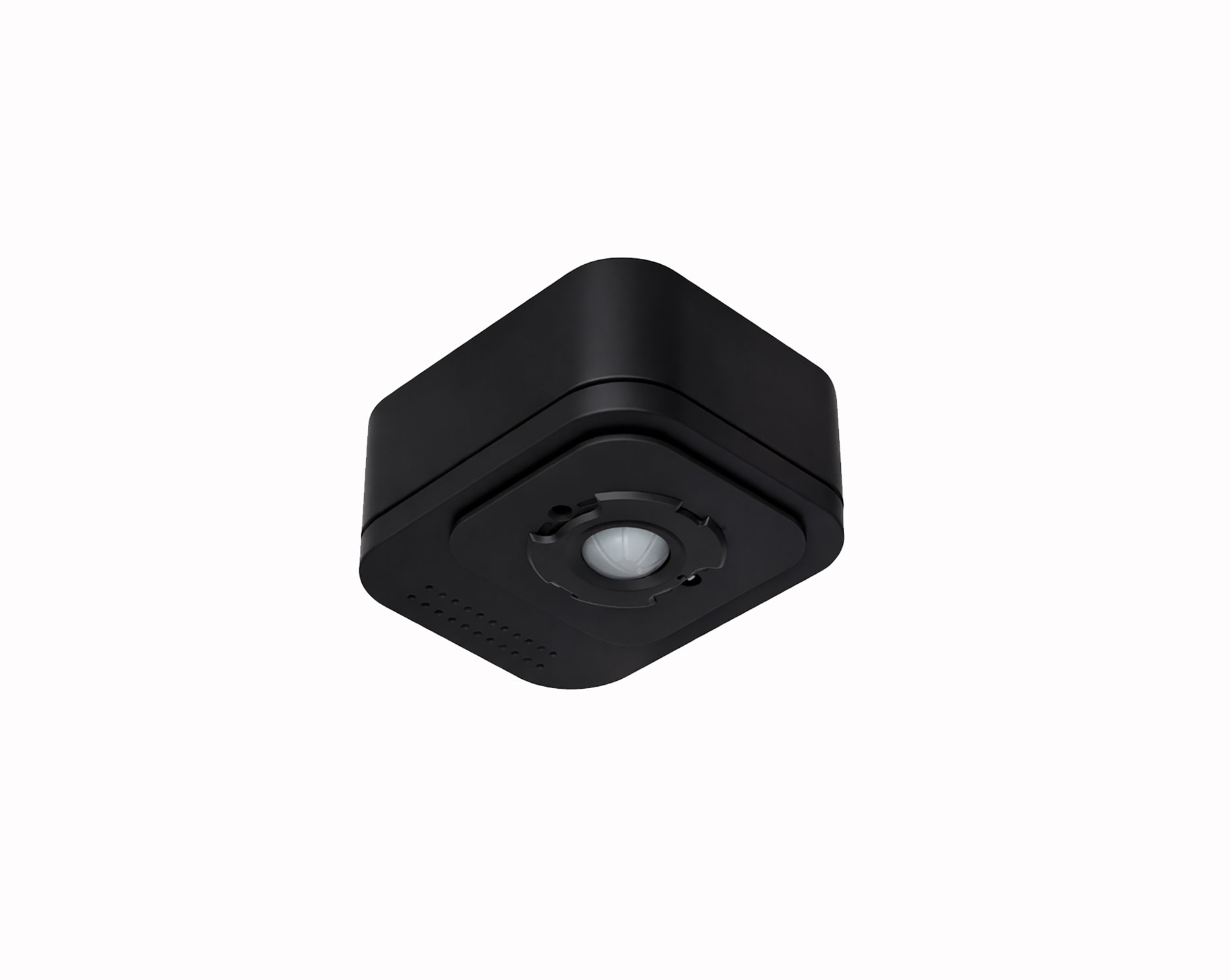
PD00E31KNX-3
BLACK
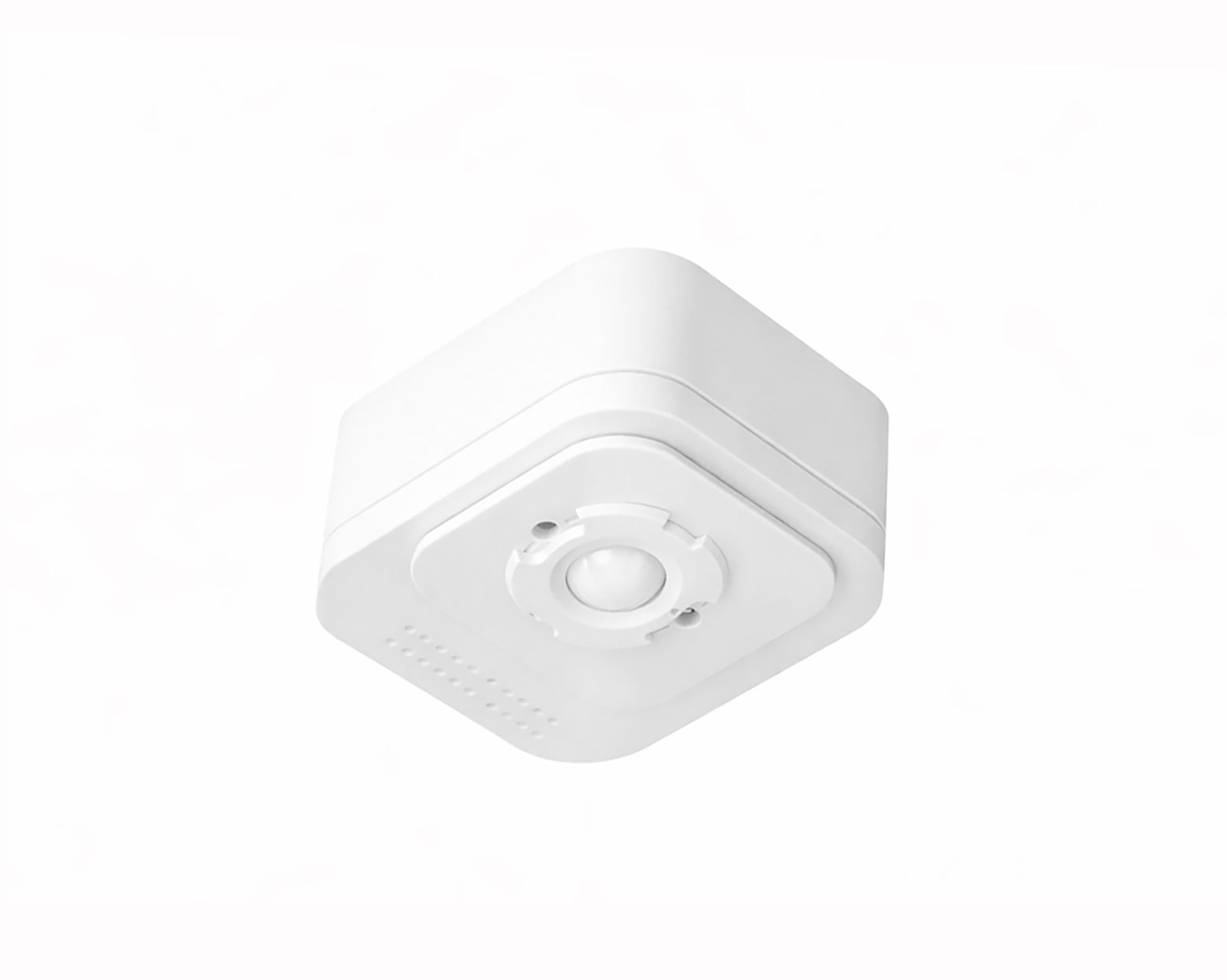
PD00E39KNX
WHITE
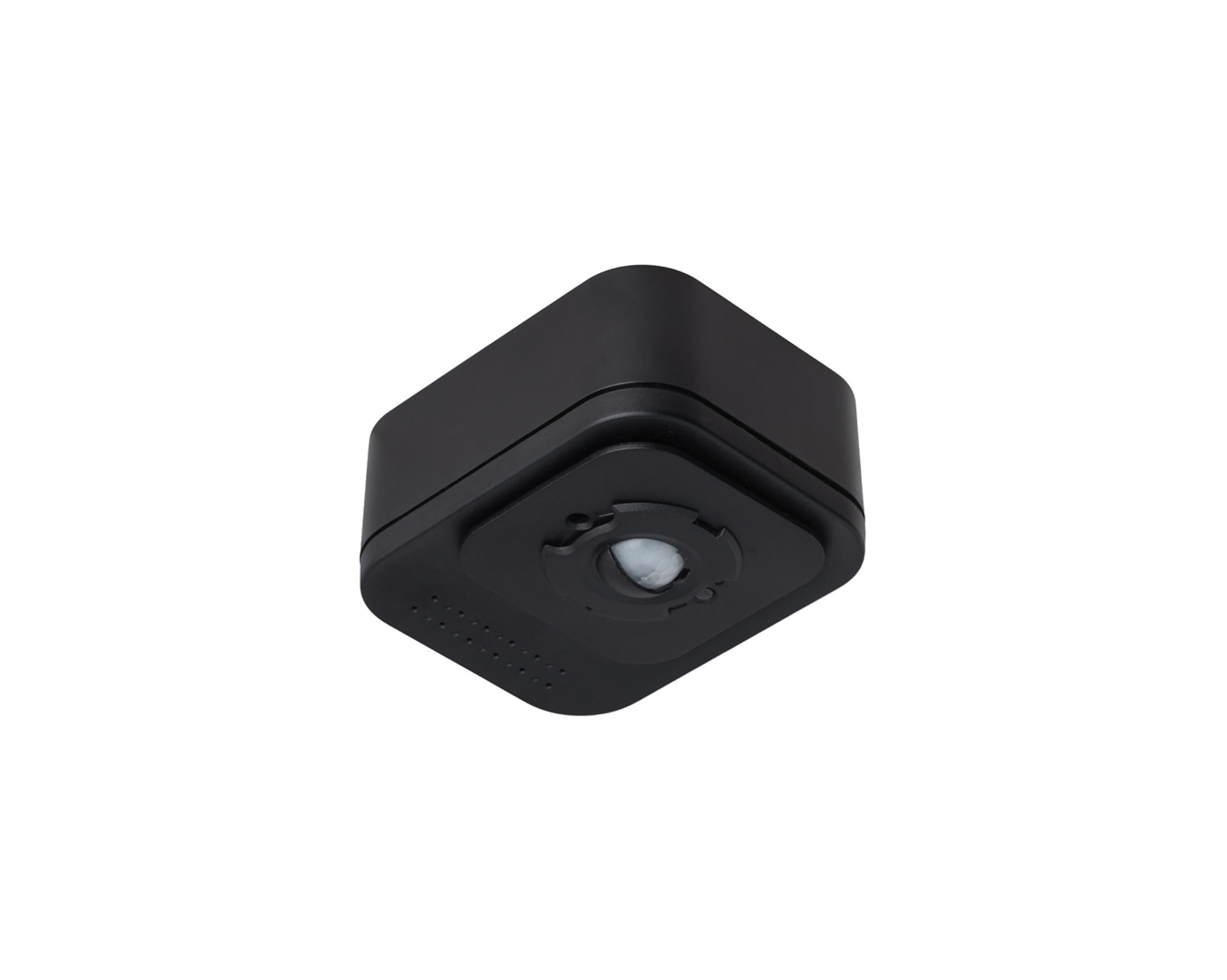
PD00E39KNX-3
BLACK

